
jestin joseph
Founder
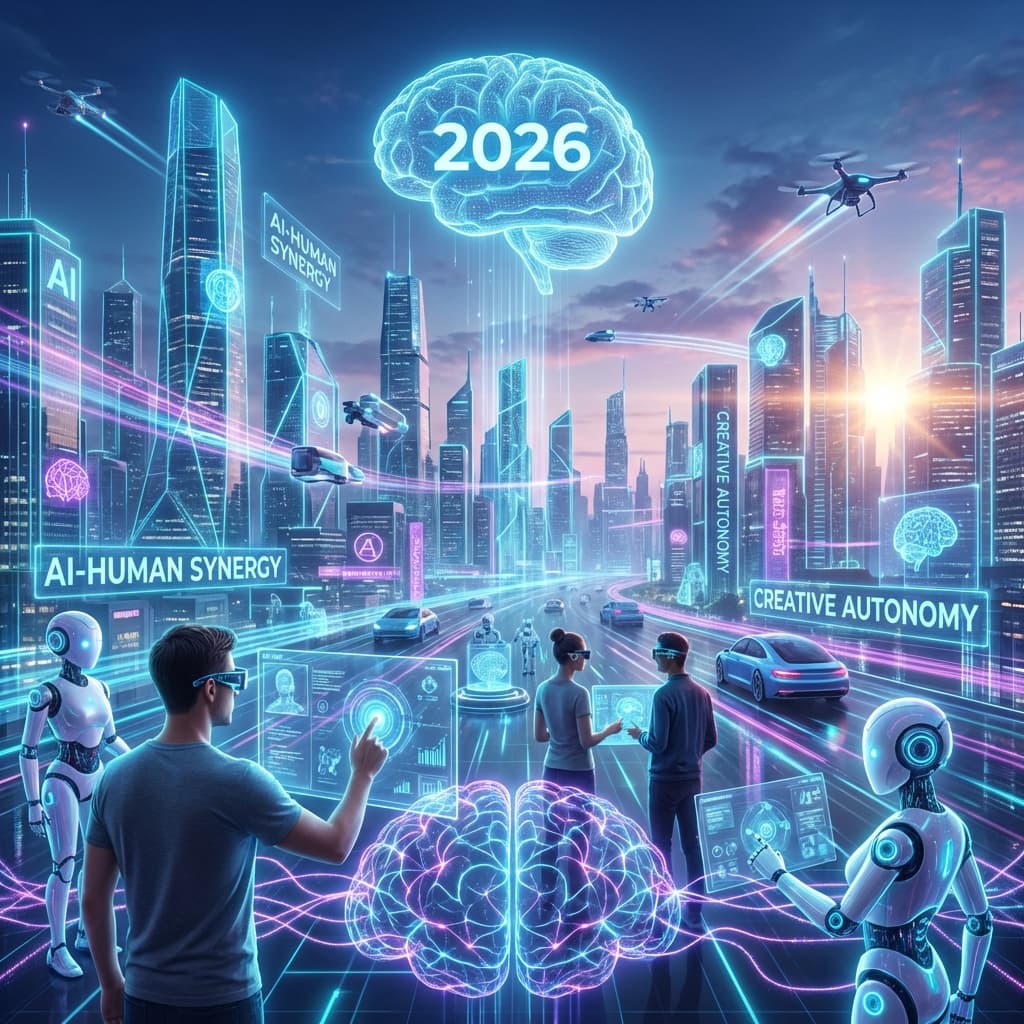
Artificial Intelligence has moved far beyond being a passing trend. In 2026, AI stands at the center of innovation across technology, business, and society. What once started as simple assistants has evolved into independent systems driving enterprise operations, software development, robotics, and more. Below are the most important AI trends shaping the year.
1. Agentic AI and Autonomous Digital Workers
AI is no longer limited to responding to commands. It now takes initiative. Agentic AI refers to intelligent systems that can make decisions, execute tasks, and manage workflows on their own. These digital workers can handle full business processes such as scheduling meetings and processing contracts, significantly reducing manual effort and improving productivity.
This shift means companies are no longer just using tools. AI is becoming a true digital colleague.
2. AI as the Core of Enterprise Architecture
By 2026, AI is no longer experimental. It has become a foundational part of enterprise strategy. Organizations are embedding AI into cloud platforms, development pipelines, and analytics systems to improve automation, scalability, and decision making.
This includes AI native development platforms, intelligent automation, predictive cloud systems, and AI powered cybersecurity.
3. Industry Specific and Vertical AI Solutions
General purpose AI models are giving way to solutions built for specific industries such as healthcare, finance, and logistics. These systems understand domain specific data and workflows, resulting in higher accuracy and lower compliance risk, especially in highly regulated sectors.
4. AI Operationalization and LLM Ops
As more AI systems enter production, LLM Ops has become essential. These operational frameworks allow teams to monitor performance, manage data drift, automate retraining, and maintain reliability at scale. Developers are increasingly shifting toward roles focused on AI infrastructure and operations.
5. AI and Robotics in the Physical World
AI is no longer confined to screens and software. Intelligent robots are now performing real world tasks in warehouses, factories, and supply chains. Smart factories and autonomous machines are expanding rapidly, marking the rise of physical AI.
6. Small Language Models and Efficiency Focus
In 2026, the focus has shifted from massive AI models to efficient and compact ones. Smaller language models can run on local devices and edge systems with lower computing requirements. This enables faster responses, reduced infrastructure costs, and broader adoption by smaller businesses.
7. Vibe Coding and a New Development Culture
Vibe coding reflects a cultural shift in software development. Developers collaborate with AI tools that suggest code, generate solutions, and help debug issues. Instead of writing every line manually, developers focus on creativity and problem solving while AI handles routine tasks.
8. Ethical and Responsible AI Governance
As AI systems gain more autonomy, ethical oversight becomes critical. Organizations are implementing governance frameworks to ensure fairness, transparency, accountability, and reduced bias across AI applications.
9. Geopolitical Competition Around AI
AI has become a strategic global asset. Nations are competing through investments, chip manufacturing, regulation, and talent acquisition to secure leadership in AI capability, sovereignty, and industrial growth.
Conclusion: Why 2026 Matters
The AI landscape in 2026 is defined by autonomous systems, deep enterprise integration, industry specific intelligence, operational maturity, efficient model design, and responsible deployment. For developers, IT professionals, and business leaders, understanding these trends is essential for staying relevant in an AI driven world.